
Every Business Generates Data. Not Every Business Uses It Well.
Modern organizations generate more data than ever before. Customer interactions, sales transactions, operational activities, marketing campaigns, and service requests all produce valuable information every day.
Yet many businesses struggle to transform this data into actionable insights. Information is often scattered across multiple systems, reports take days to prepare, and leaders are forced to make important decisions based on incomplete or outdated data.
The real competitive advantage isn’t collecting more data—it’s making better decisions with the data you already have.
That’s where a data-driven organization stands apart.
What Is a Data-Driven Organization?
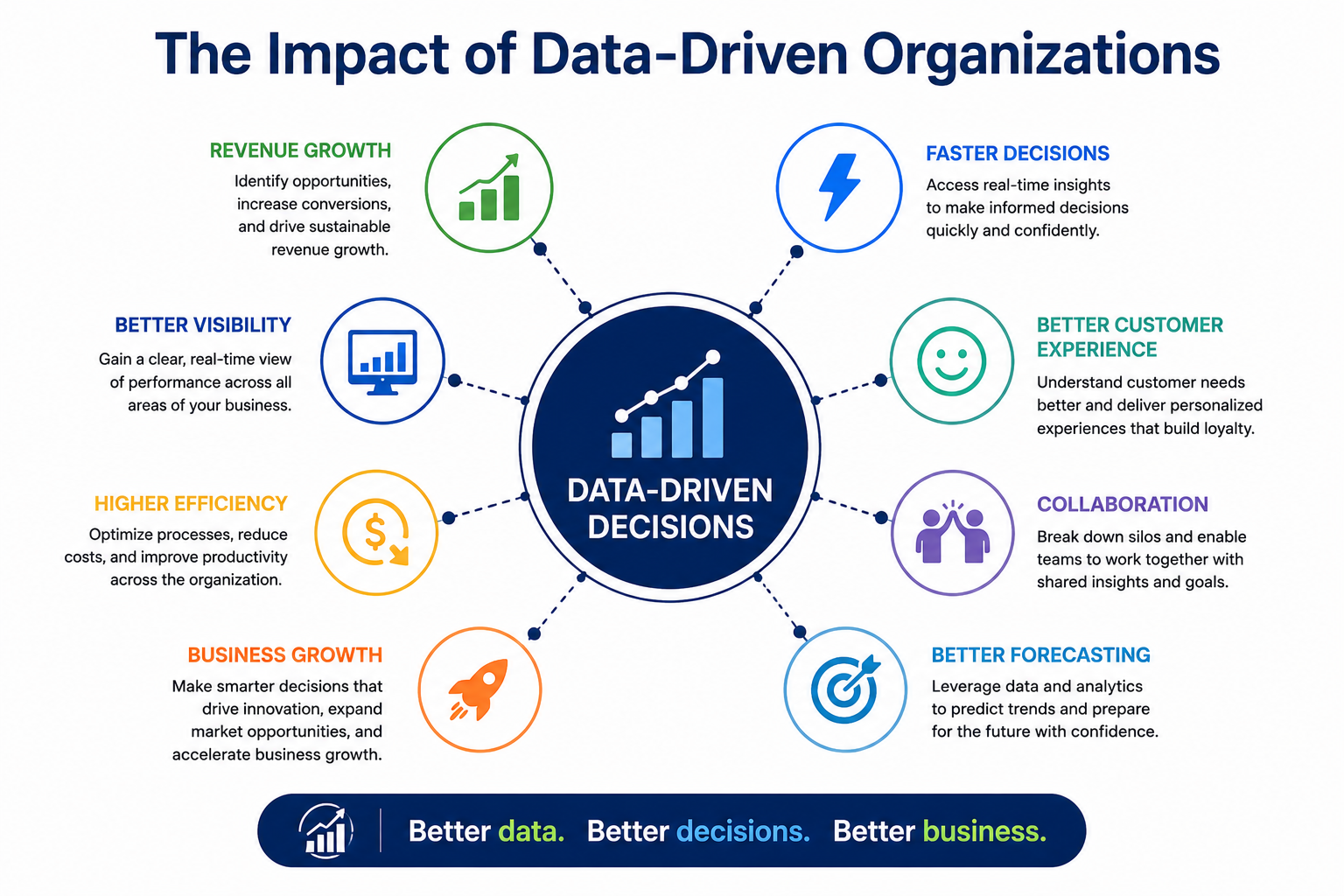
A data-driven organization uses reliable, real-time information to guide decisions at every level of the business.
Instead of relying on assumptions or intuition alone, leaders use dashboards, analytics, and measurable KPIs to understand what’s happening, identify trends, and take action with confidence.
Being data-driven means every department—from sales and marketing to operations and customer service—works from a shared source of truth.
Why Data Alone Isn’t Enough
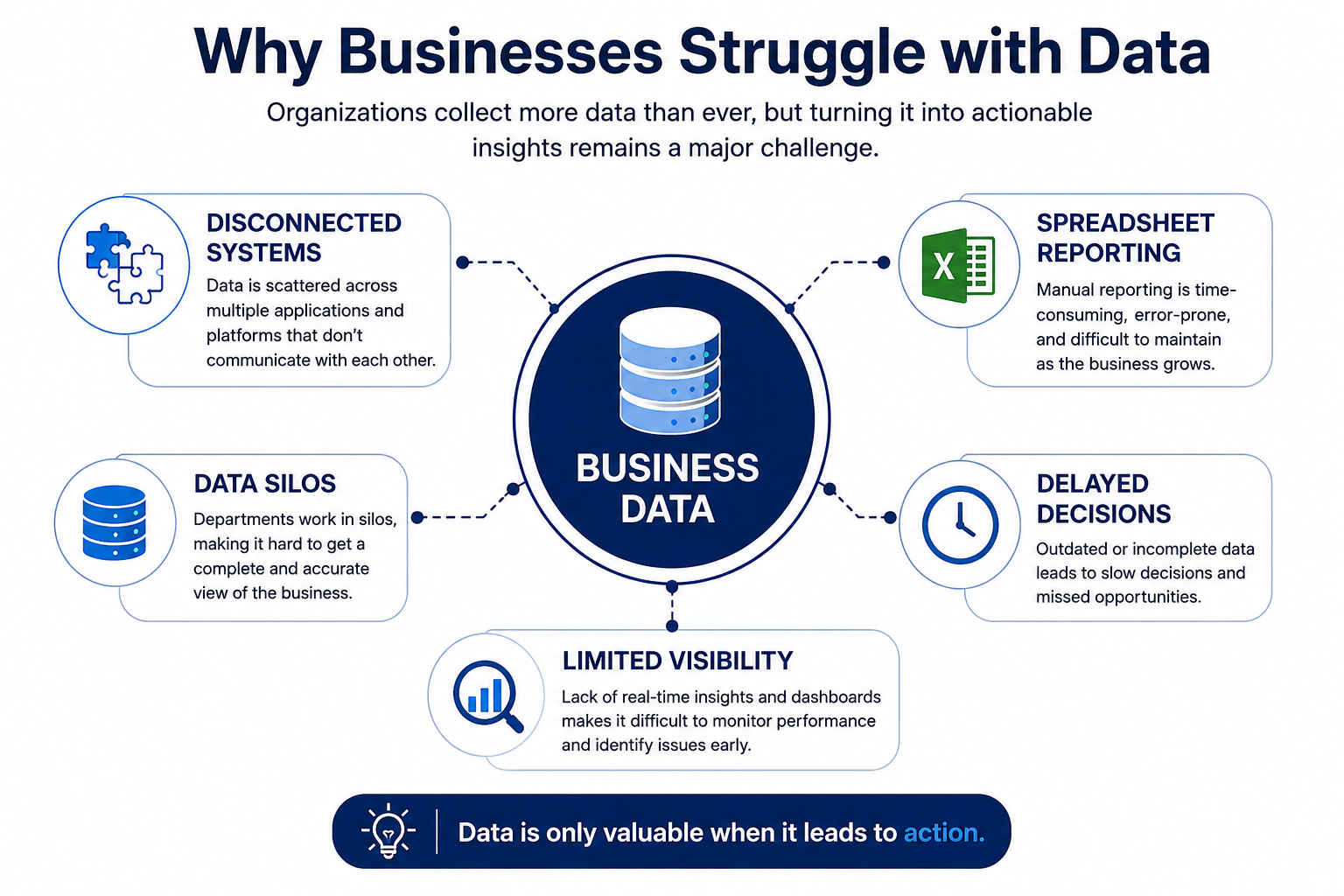
Many organizations have invested in CRM platforms, ERP systems, customer service tools, and financial applications. However, data often remains isolated in separate systems.
Common challenges include:
- Disconnected business applications
- Manual reporting using spreadsheets
- Duplicate or inconsistent data
- Delayed decision-making
- Limited visibility into business performance
Without integration and analytics, data becomes difficult to interpret and even harder to use effectively.
The Journey From Data to Decisions
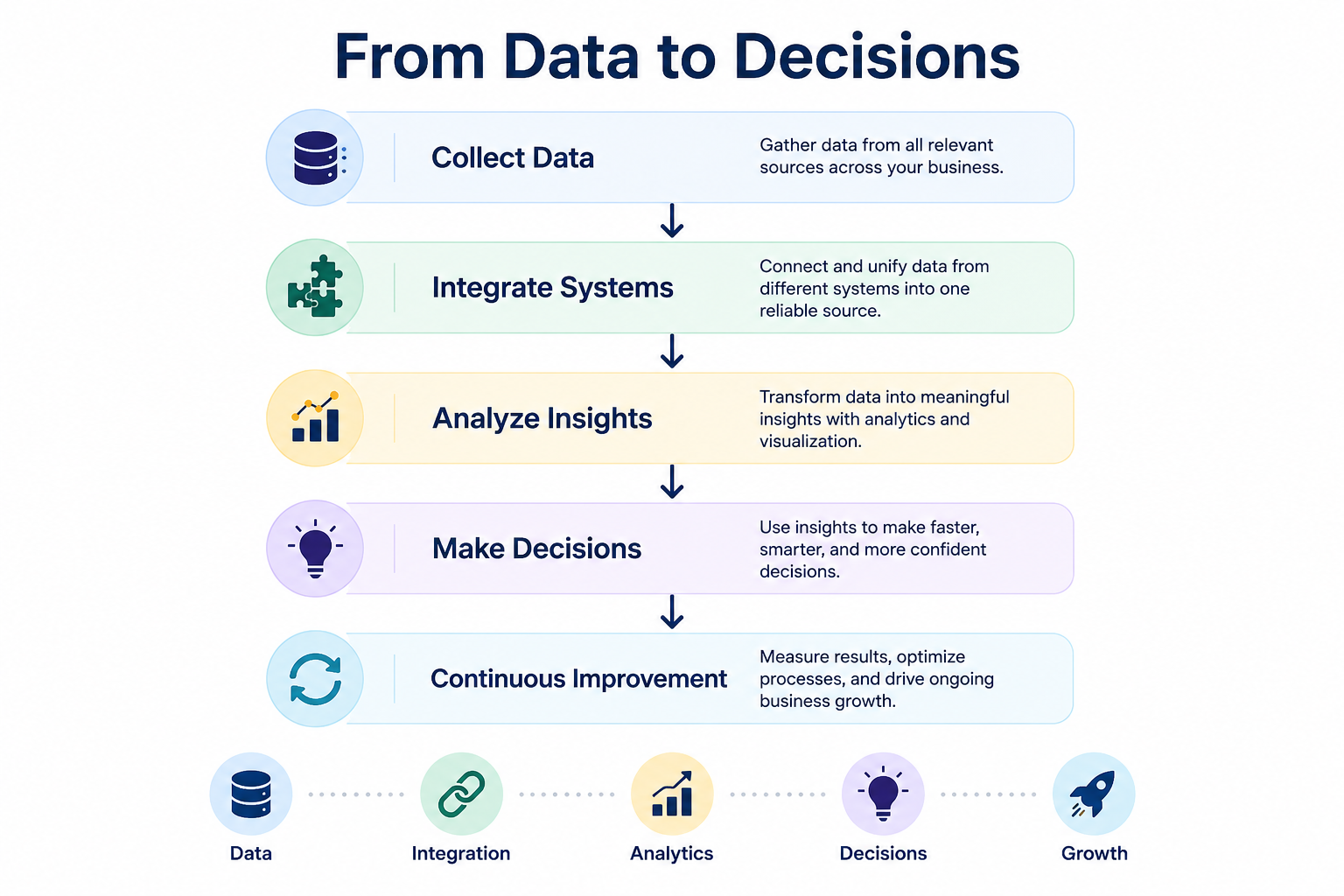
Turning raw information into strategic action requires a structured process.
1. Collect Data
Gather information from every relevant business system, including CRM, ERP, HR, finance, customer service, marketing platforms, and operational applications.
The broader the data sources, the more complete your business picture becomes.
2. Integrate Information
Combine data into a centralized platform where information is consistent, accurate, and accessible across departments.
Integration eliminates silos and creates a single source of truth.
3. Analyze Performance
Use dashboards, KPIs, and business intelligence tools to identify trends, monitor performance, and uncover opportunities for improvement.
Analytics transforms raw numbers into meaningful insights.
4. Make Faster Decisions
When leaders have access to real-time information, they can respond quickly to changing market conditions, customer needs, and operational challenges.
Decision-making becomes proactive instead of reactive.
5. Continuously Improve
A data-driven organization doesn’t stop after one decision.
Insights should be used to measure results, optimize processes, and continuously improve business performance.
The Role of Executive Dashboards
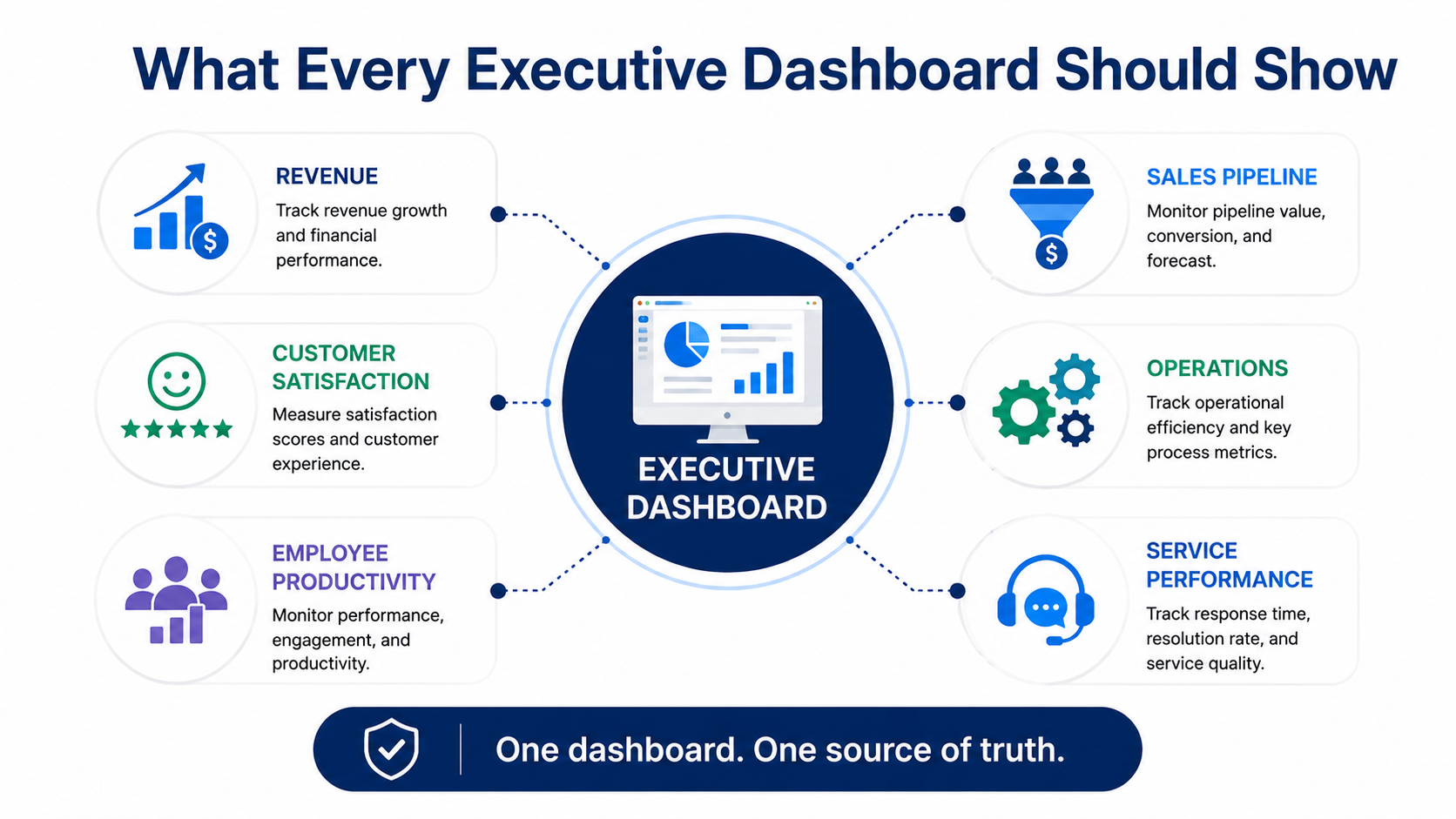
Executive dashboards help decision-makers understand business performance at a glance.
Instead of reading lengthy reports, leaders can instantly monitor critical metrics such as:
- Revenue growth
- Sales pipeline
- Customer satisfaction
- Operational efficiency
- Service performance
- Employee productivity
Real-time dashboards provide visibility that enables faster, more confident decision-making.
How AI Makes Data Even More Valuable
Artificial Intelligence enhances analytics by identifying patterns that humans might overlook.
Modern AI solutions can:
- Predict business trends
- Detect anomalies
- Recommend next-best actions
- Generate summaries automatically
- Forecast future performance
- Support strategic planning
Rather than replacing decision-makers, AI equips them with deeper insights and faster analysis.
Benefits of Becoming a Data-Driven Organization
Organizations that embrace data-driven decision-making often achieve:
- Faster business decisions
- Greater operational visibility
- Improved customer experience
- Better cross-functional collaboration
- More accurate forecasting
- Higher productivity
- Increased profitability
- Continuous business improvement
Data becomes more than information—it becomes a strategic business asset.
Building a Data-Driven Culture
Technology alone isn’t enough.
Successful organizations also build a culture where employees trust data, use consistent metrics, and make decisions based on evidence rather than assumptions.
This requires:
- Clearly defined KPIs
- Accessible dashboards
- Integrated business systems
- Strong data governance
- Ongoing data literacy and adoption
When people, processes, and technology work together, data becomes a powerful driver of innovation and growth.
Conclusion
Every organization already has valuable data.
The real challenge is transforming that data into meaningful decisions that improve performance, enhance customer experiences, and support long-term growth.
With the right combination of data integration, analytics, executive dashboards, and AI-powered insights, businesses can move beyond reporting and start making smarter, faster, and more confident decisions.
Build a data-driven organization, now!
Unlock the full value of your business data with iSystem Asia. Our Data & Analytics, AI Solutions, CRM, and Digital Transformation services help organizations turn complex information into actionable insights that drive measurable business results.
Let’s build a smarter, data-driven future together.