
Data has become one of the most valuable assets for organizations. Companies generate massive amounts of information every day through customer interactions, sales activities, marketing campaigns, and operational processes. However, raw data alone is not enough. Businesses need analytics to transform data into meaningful insights that support better decision-making and long-term growth.
Business analytics plays a critical role in helping organizations understand market trends, customer behavior, and operational performance. By analyzing data effectively, companies can make faster, smarter, and more strategic decisions. This is why analytics has become an essential component of modern business strategy.

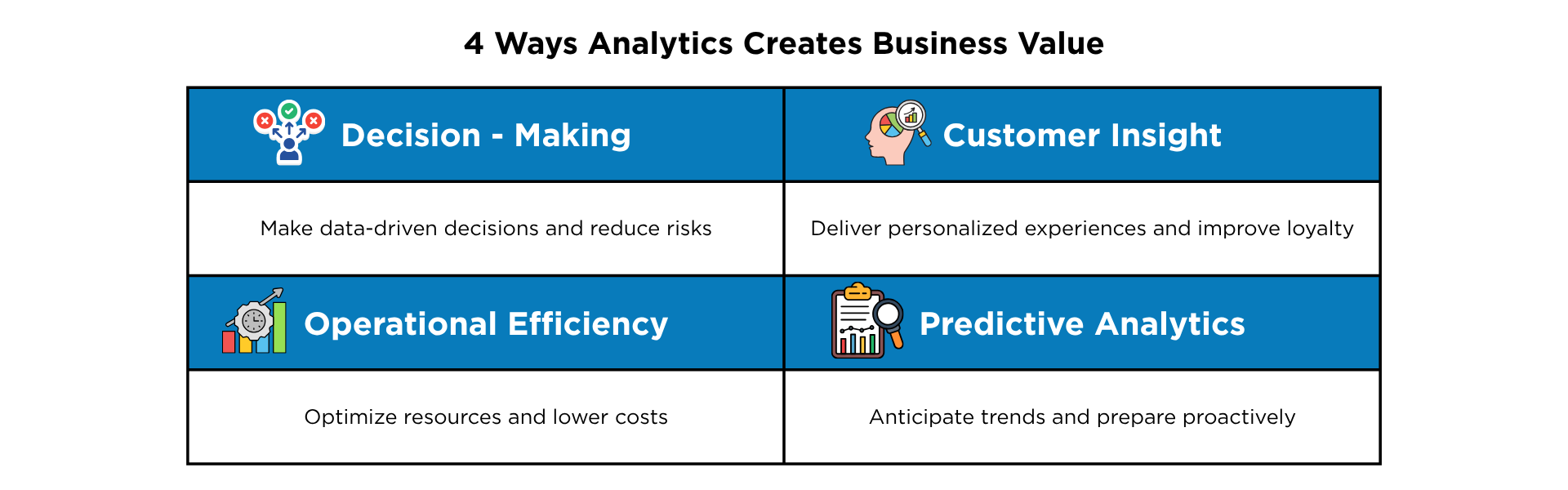
One of the key benefits of analytics is improved decision-making. Traditional business decisions were often based on assumptions or limited information. Today, analytics allows organizations to make data-driven decisions supported by real-time insights and measurable performance indicators. This helps businesses reduce risks and identify new opportunities more accurately.
Analytics also helps companies better understand their customers. By analyzing customer preferences, behaviors, and purchasing patterns, businesses can create more personalized experiences and targeted marketing strategies. Personalized customer engagement not only improves satisfaction but also increases customer loyalty and retention.
Another important role of analytics is operational efficiency. Businesses can use analytics tools to monitor workflows, identify inefficiencies, and optimize resource allocation. With better visibility into operations, organizations can improve productivity, reduce costs, and enhance overall business performance.
In addition, predictive analytics enables companies to anticipate future trends and customer needs. Instead of only reacting to problems, businesses can proactively prepare strategies based on data forecasts and insights. This allows organizations to stay competitive in rapidly changing markets.
As digital transformation continues to evolve, analytics is becoming increasingly important across industries. Companies that successfully leverage data analytics are often more agile, customer-focused, and capable of adapting to market changes. From improving operational efficiency to supporting strategic planning, analytics helps businesses create sustainable competitive advantages.
Ultimately, analytics is no longer just a reporting tool — it has become a strategic driver for business growth and innovation. Organizations that invest in data-driven strategies are better positioned to make informed decisions, improve customer experiences, and achieve long-term success.